Stepping into a chamber cooled to nearly -100°F sounds uncomfortable, and for the first thirty seconds, it usually is. That brief cold shock is exactly why cryotherapy in Bigfork, Montana, has become part of the regular recovery routine for athletes, weekend warriors, and anyone managing chronic soreness. At Elysian Institute, a cryotherapy session runs two to three minutes and sets off a chain reaction the body doesn’t produce on its own.

What Happens to Your Body During a Cryotherapy Session?
Whole-body cryotherapy exposes skin to extremely cold, dry air, typically -80°F to -100°F, for two to three minutes. That cold triggers vasoconstriction, pulling blood away from the extremities and toward the body’s core. Once the session ends, blood vessels dilate again, sending oxygen- and nutrient-rich blood back through the muscles and joints. Most of the recovery benefit happens in that rebound, not during the cold exposure itself.
How Does Cold Exposure Reduce Inflammation and Speed Recovery?
The circulatory rebound helps clear metabolic waste from tissue stressed by training, injury, or long hours on your feet. Cold exposure also triggers a release of endorphins, part of why clients often describe feeling more alert and less achy right after a session.
A 2025 meta-analysis of eleven randomized controlled trials found that whole-body cryotherapy calmed one marker of inflammation in the blood (IL-1β) and boosted a marker linked to reducing inflammation (IL-10), with athletes seeing more benefit on the first and participants with obesity seeing more benefit on the second. The same analysis found no meaningful shift in two other inflammation markers (IL-6 and TNF-α), a reminder that cryotherapy’s anti-inflammatory effect isn’t the same across every measure researchers track. Cryotherapy supports recovery, but it is important to note that it is not a substitute for rest, hydration, or treating the underlying cause of an injury.
Why Local Access Matters for Consistency
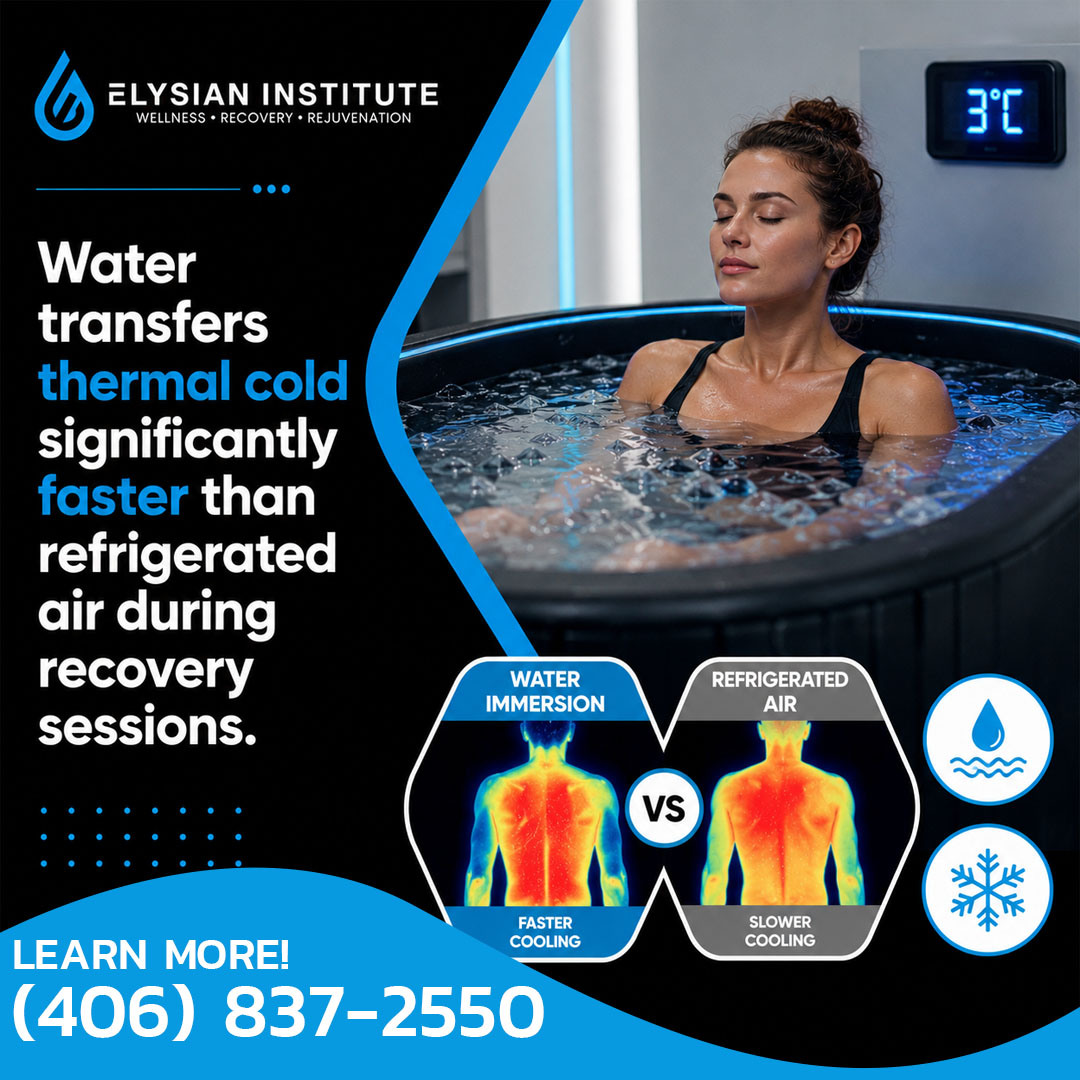
Recovery modalities like this work best with repetition, not a single visit. Having cryotherapy in Bigfork, MT, available close to home makes it realistic to build cold exposure into a weekly routine instead of treating it as a one-time experiment. If cold immersion on its own appeals to you more than the dry-air chamber, the Glacier Contrast Room offers hot and cold plunge as part of the same recovery philosophy.
Who Should Get Screened Before Trying Cryotherapy?
Not everyone is a good fit for extreme cold exposure. At our recovery wellness center, clients with uncontrolled heart conditions, circulatory disorders such as Raynaud’s disease, cold-related conditions, seizure disorders, or active infections or fever are screened out before scheduling.
Pregnancy is also a contraindication, along with severe anemia or blood clotting disorders. Cryotherapy sits closer to a medical-adjacent modality than a routine spa treatment, and Elysian Institute staff review health history with clients so the same cold that helps one person recover is avoided by another for good reason.
If cryotherapy is your entry point into a broader recovery routine, it’s worth reading how a professional recovery wellness center layers modalities like this together instead of using them in isolation. Elysian Institute built its cryotherapy protocol around that kind of screening-first approach.
Curious whether cryotherapy fits your recovery routine? Reach out to our team at (406) 837-2550 or [email protected], and we will walk you through what to expect, from screening to your first two-minute session at our recovery center in Montana.