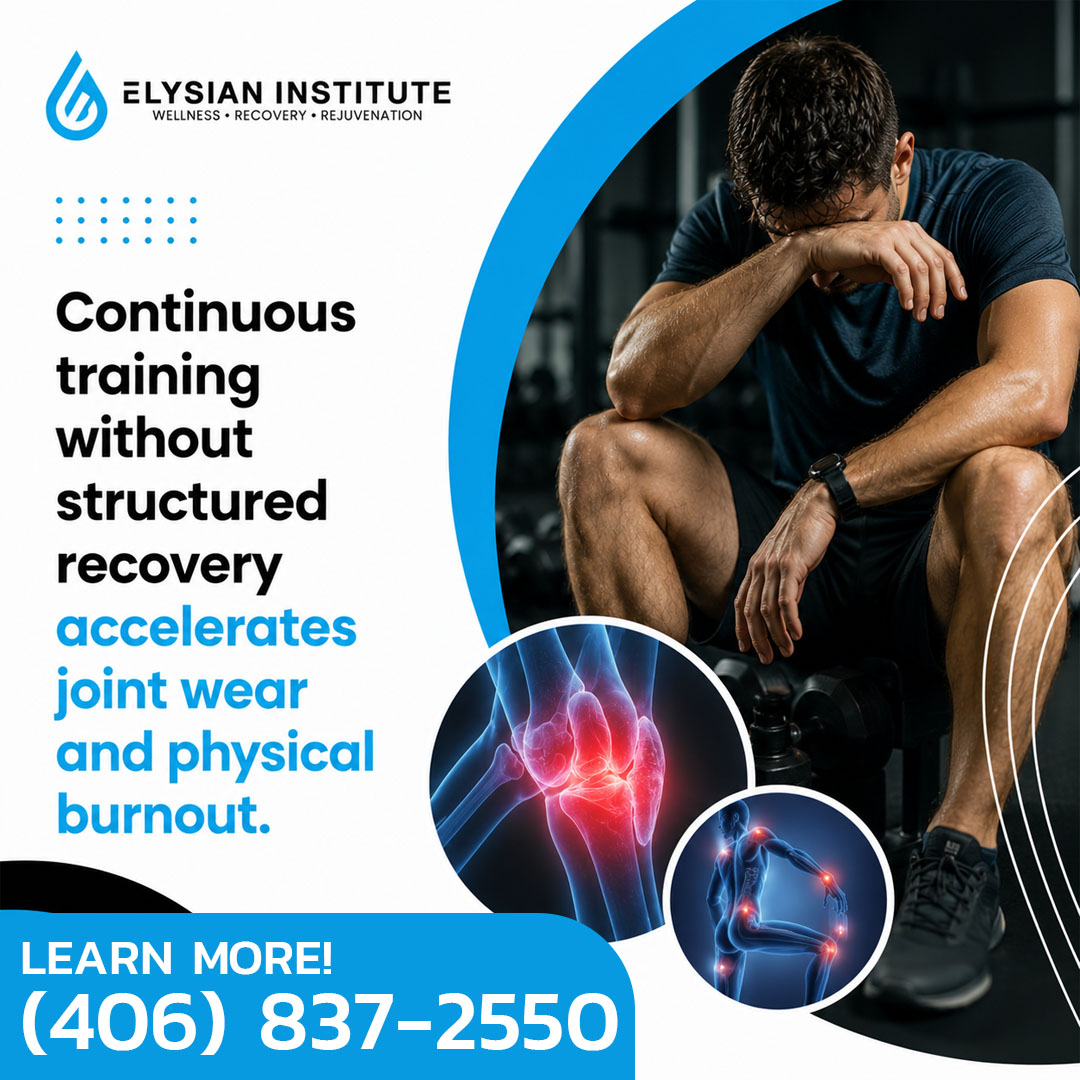
Cryotherapy uses dry, refrigerated air, typically -80°F to -100°F for two to three minutes, while a cold plunge uses cold water, usually 50°F to 59°F for five to ten minutes. Both trigger the same basic response, vasoconstriction followed by a rebound in circulation, but the delivery method, duration, and intensity differ enough that they aren’t interchangeable.
Clients at Elysian Institute often ask which one is “better,” and the honest answer depends more on personal tolerance than on one modality outperforming the other.
How Cold Does Each Modality Get, and for How Long?
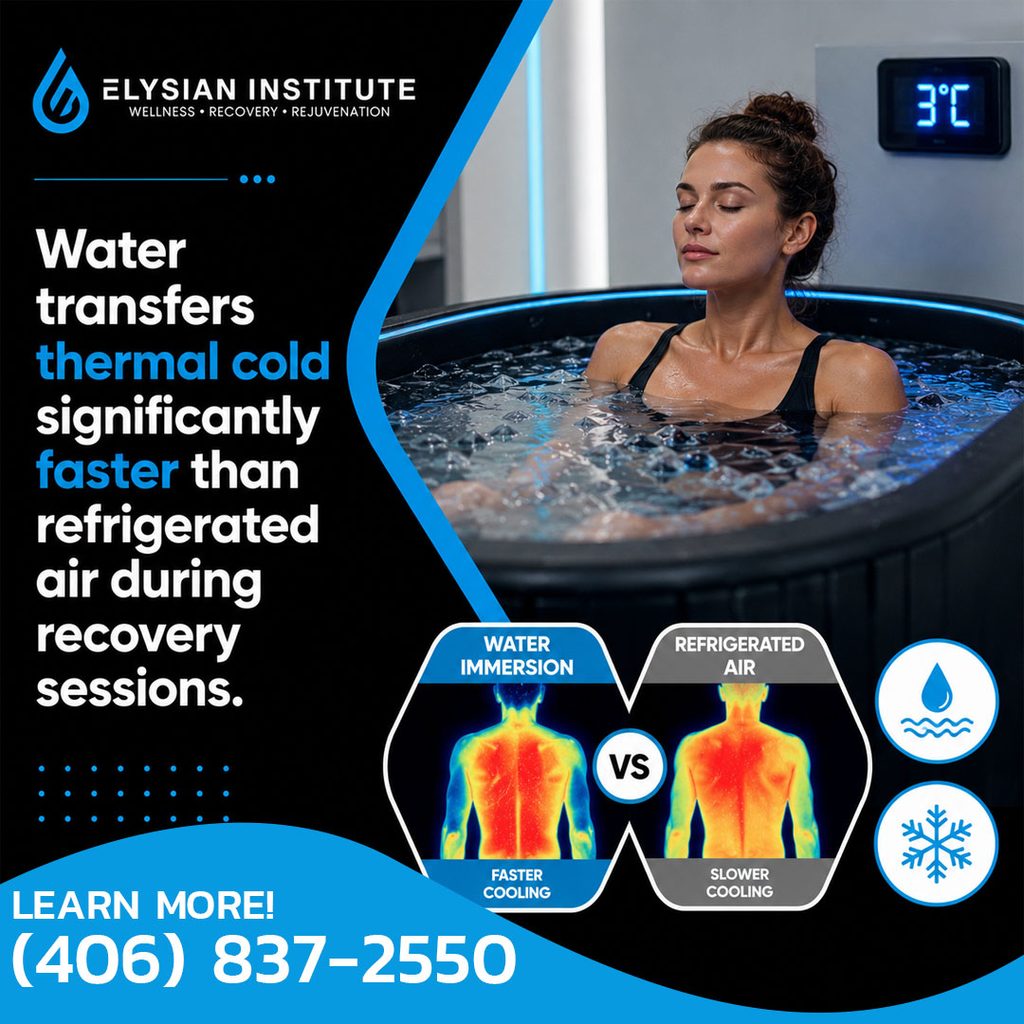
Air and water don’t pull heat from the body at the same rate. Water conducts cold far faster than air, which is why a cold plunge only needs to reach the 50s to feel intense, while cryotherapy has to drop much lower to produce a comparable physiological effect in a fraction of the time.
More experienced cold plunge users sometimes go colder, down to the low 40s, for a shorter three-to-six-minute soak, but beginners are better served starting at the higher end of the range with hands and head kept above the water.
During a cold plunge, the body is submerged for five to ten minutes total. Cryotherapy sessions run two to three minutes, with the head kept out of the chamber and protective garments, including socks and gloves, worn to shield sensitive skin from the extreme dry cold. At Elysian Institute, both modalities follow the same core safety screening.
Which One Fits Your Recovery Goals?
If you’re short on time or find sitting in cold water uncomfortable, cryotherapy’s two- to three-minute session may fit your routine more easily. If you prefer a longer, more gradual cold exposure or full-body immersion, a cold plunge in one of our Bigfork contrast rooms may be a better fit.
A review of controlled cryotherapy studies published in the Open Access Journal of Sports Medicine noted that less expensive cold modalities, including cold water immersion, appear to offer comparable physiological and clinical effects to whole-body cryotherapy chambers, which supports the idea that consistency matters more than which cold modality you choose. At our recovery wellness center in Bigfork, clients can try both and see which one fits their body and schedule better.
Is One Better Than the Other?
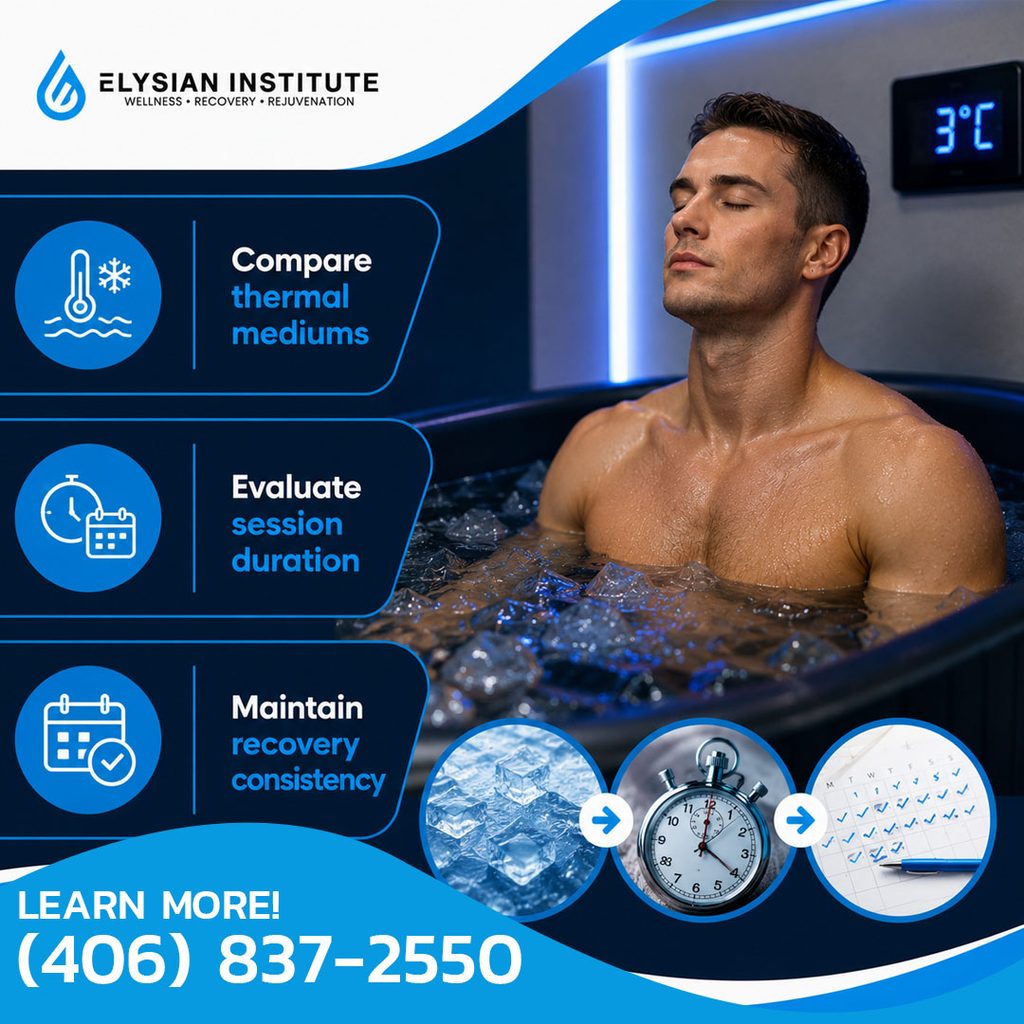
Elysian Institute’s team fields this question often, and neither modality is definitively superior. Both trigger a circulatory rebound, both are associated with an endorphin release that leaves many clients feeling more alert afterward, and both come with contraindications, including uncontrolled heart conditions, circulatory disorders, and pregnancy. The honest answer is that the better choice usually comes down to what a client can tolerate and repeat consistently.
If you want a closer look at how Elysian Institute layers cold therapies into a broader recovery plan, our Bigfork recovery wellness center guides take a deeper look at what that approach can involve.
Not sure which cold therapy is the better starting point for you? Reach out to our recovery center in Bigfork, MT at (406) 837-2550 or [email protected], and Elysian Institute’s team can walk you through both before you book.