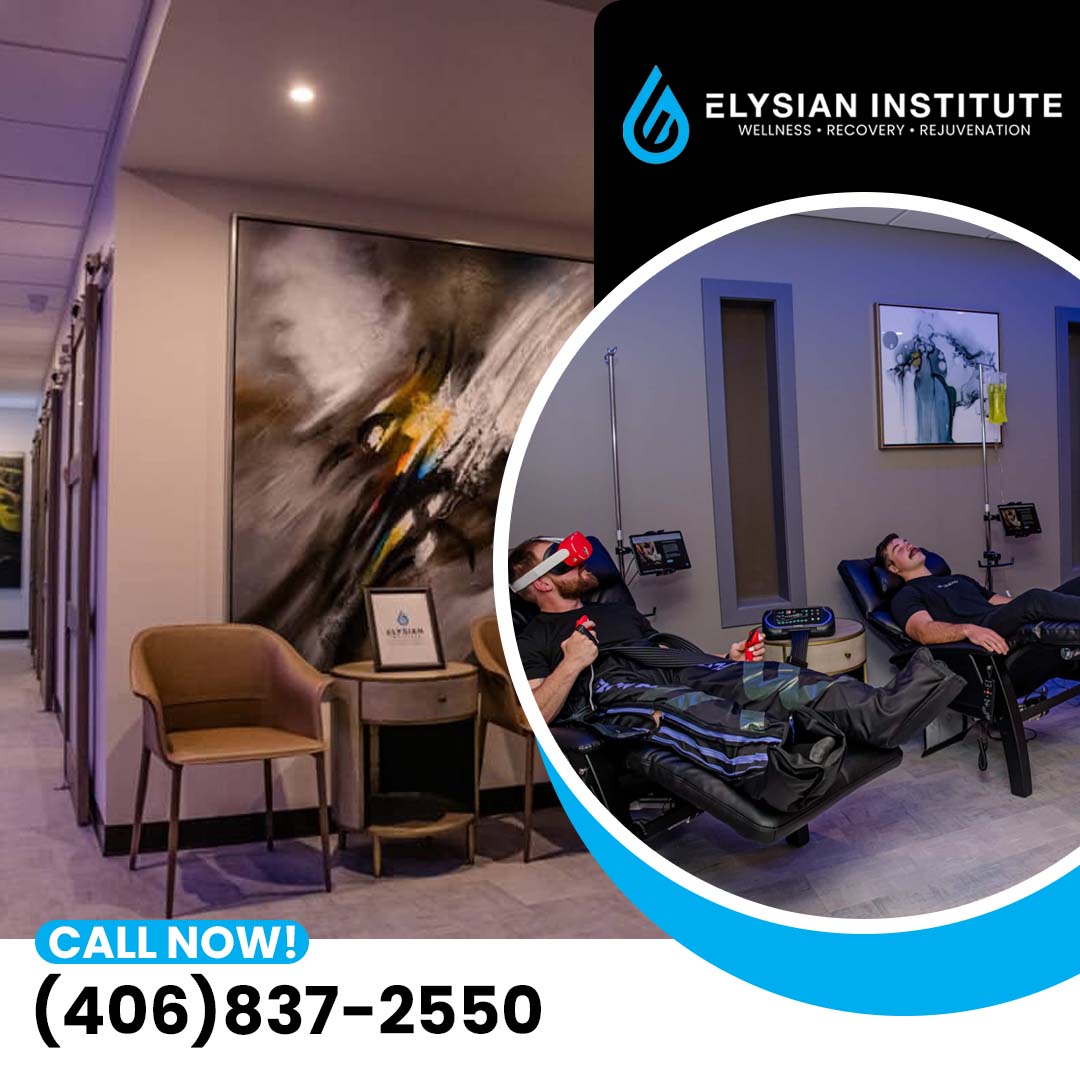
Biohacking is a broad term used to describe intentional strategies aimed at improving health, performance, recovery, and longevity. These strategies can range from evidence-based lifestyle habits to advanced wellness technologies, with clinical settings emphasizing data-informed, medically supervised approaches. At Elysian Institute, our performance wellness center in Montana, brings these tools together under medical oversight instead of leaving you to experiment alone.
What Does a Biohacking Clinic Actually Offer?
A biohacking longevity clinic combines diagnostic tools with recovery and performance therapies in one supervised setting. At Elysian Institute, that means services like red light therapy, PEMF, cryotherapy, and IV nutrient infusions, paired with body composition testing to track real progress. Instead of chasing trends from social media, you get a plan built around your own data. This is the difference between a true health optimization clinic and a one-off treatment booked on impulse.
How Does the Process Start?
Many clients begin with a baseline assessment before starting therapies, so their progress can be measured over time. Depending on individual goals, this may include body composition testing or other wellness assessments. A short consultation helps determine which combination of therapies fits your current goals, whether that’s recovery, energy, or longer-term cellular health.
How Is This Different From DIY Biohacking?
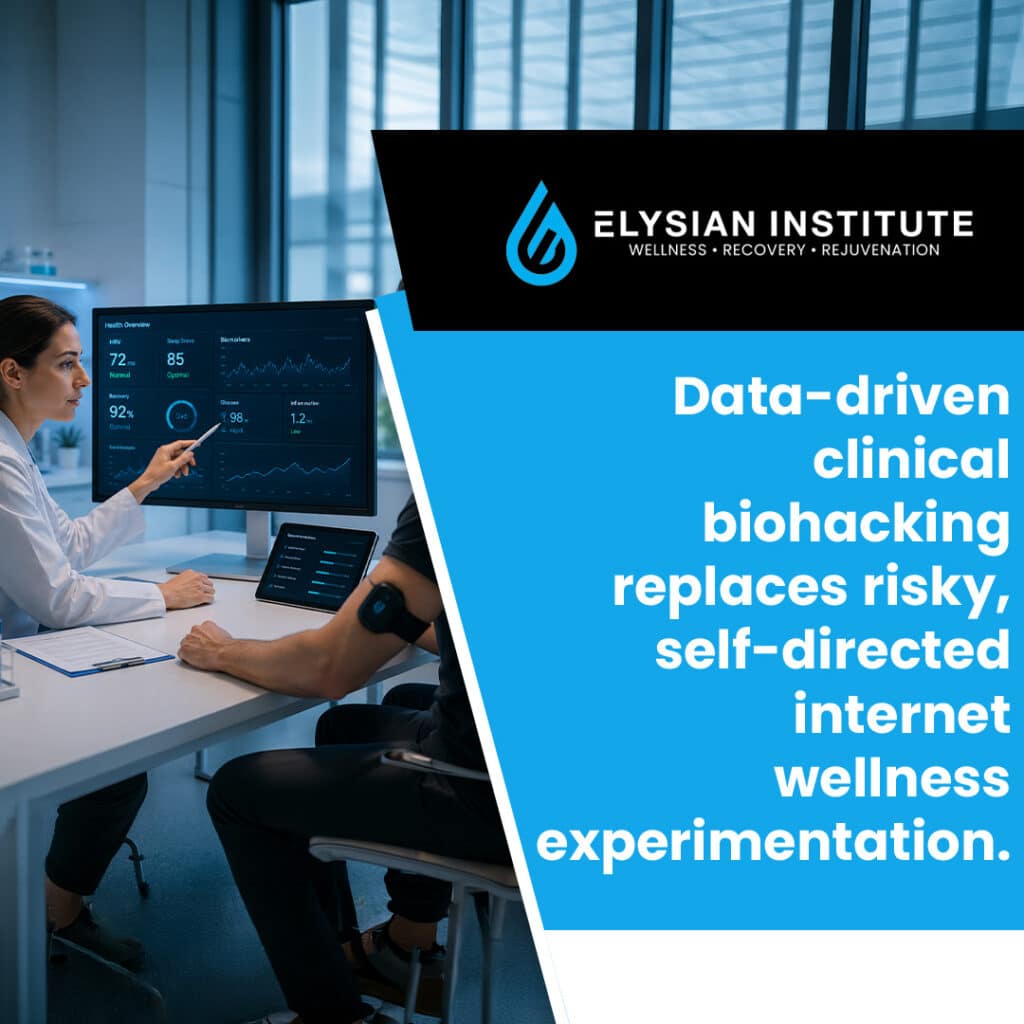
DIY biohacking often means stacking supplements, gadgets, and routines pulled from forums and influencers, with no way to verify what’s actually working. A clinical setting changes that equation. Every client completes a medical intake with our Nurse Practitioner, and intakes are required every six months to stay current; if yours has lapsed, plan to arrive 15–20 minutes early so we can review your history before treatment.
According to Cleveland Clinic, biohacking includes a wide range of approaches, from everyday lifestyle habits to more experimental techniques, which is why professional guidance can be valuable when considering advanced wellness therapies.
What Role Does Supervision Play Long-Term?
Clinical oversight isn’t just for your first visit; it shapes how your plan evolves. As your body responds to different therapies, a supervised model allows adjustments based on actual results instead of sticking rigidly to a routine that may no longer fit. This ongoing check-in is part of what separates a clinic-based approach from a self-directed one, where there’s rarely a mechanism to catch when something isn’t working anymore.
Is a Biohacking Clinic Right for You?
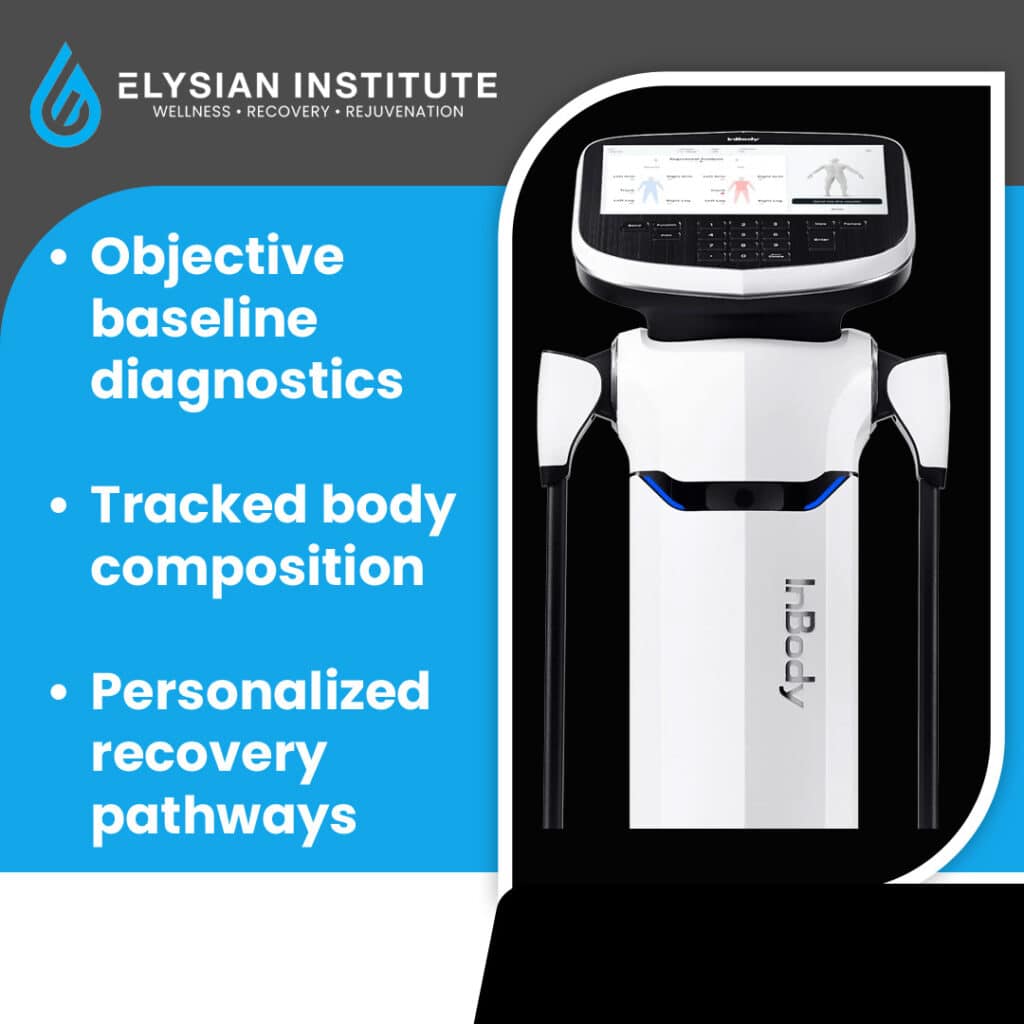
If you’re already tracking your sleep, nutrition, and workouts but feel stuck, a clinic-based approach adds the missing piece: objective measurement and professional guidance. We often start clients with body composition testing, similar to what’s offered through our integrative longevity clinic services, so you have a baseline before adding any therapy. From there, recovery tools like our hyperbaric chamber, a hard-shelled, two-person unit capable of reaching 2 ATA, or IV infusions can be layered in based on what your results actually show.
Elysian Institute was built around this principle: optimization should be guided, not guessed at. If you’re curious whether a biohacking clinic in Bigfork, MT, fits your goals, our team can walk you through what evidence-based optimization looks like for your specific situation. Schedule a consultation at (406) 837-2550 or [email protected] and find out where your body stands today.